as a weed
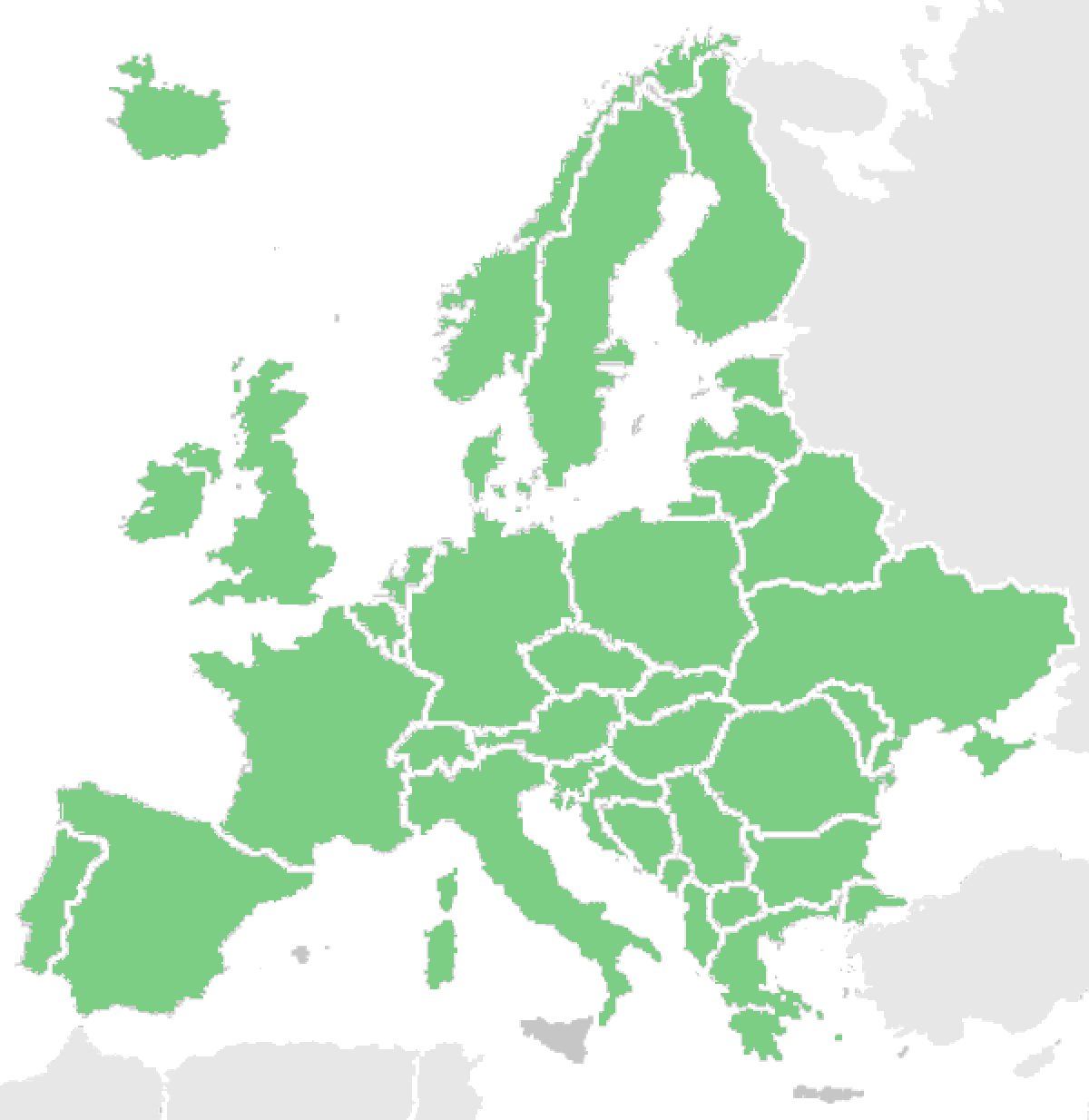 Europe
 World
World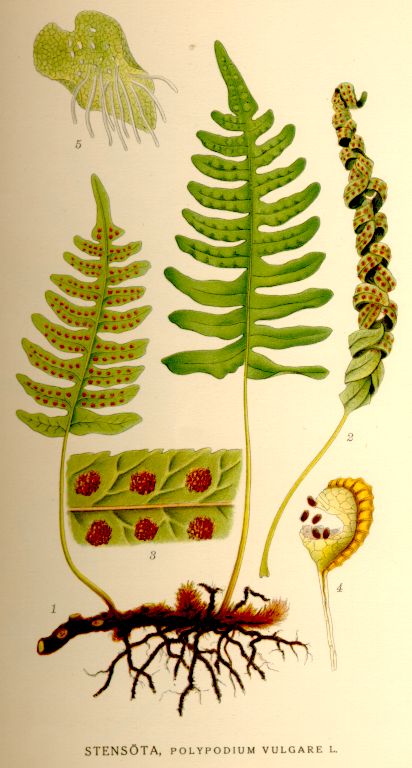 diagnostic details from C. A. M. Lindman's Flora
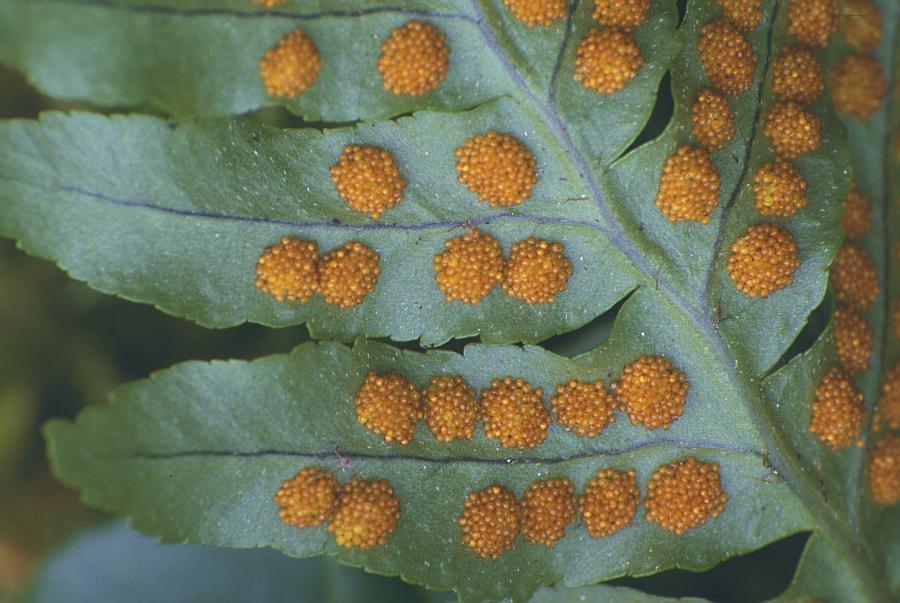 fertile pinnae
| Polypodium vulgare | ||
Common polypoidy | ||
|
Etymology
Vulgare is the Latin word for common.
Description
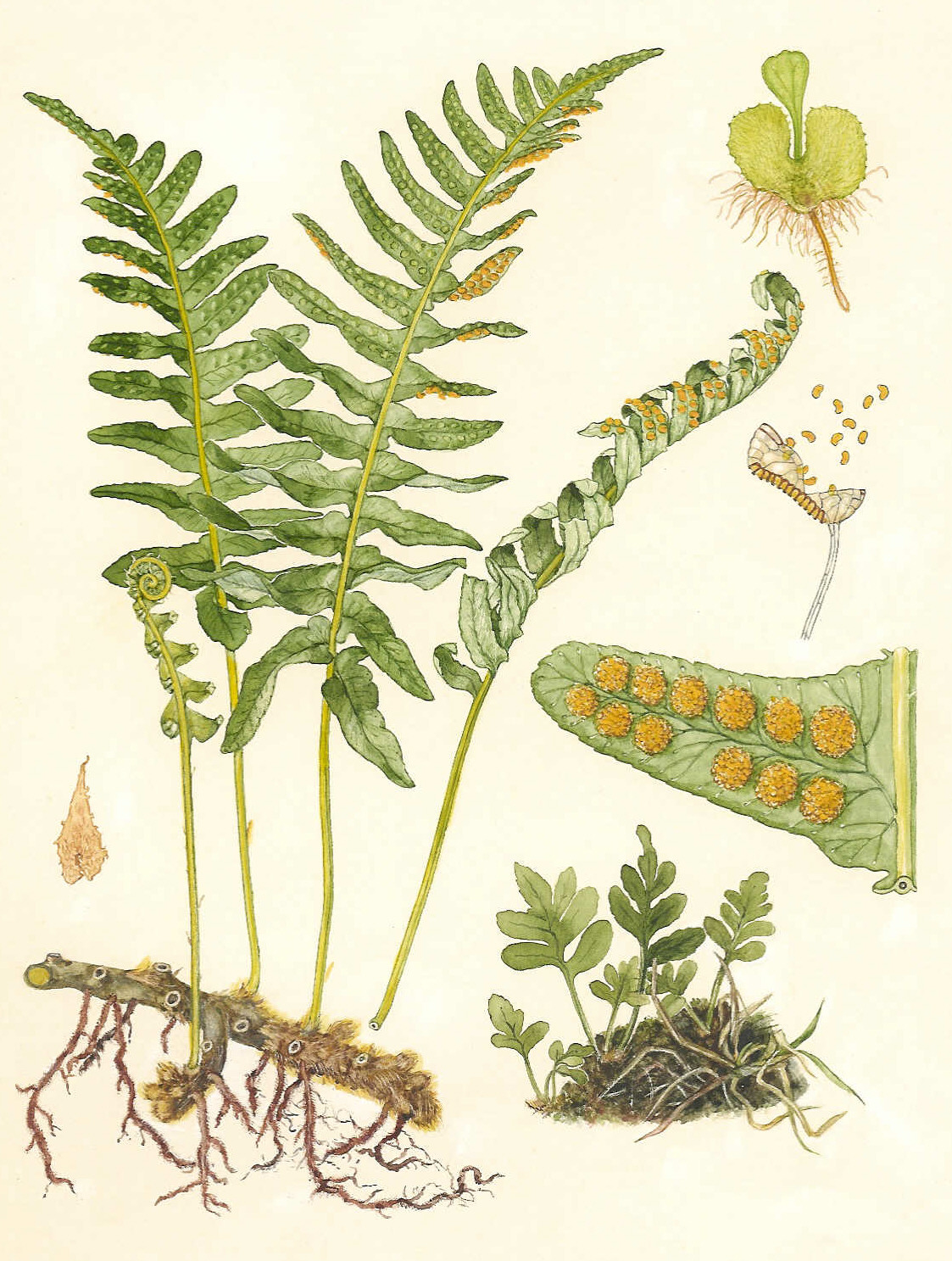
Rhizome: creeping, branching, whitish waxy, rather thick, with phylopodia, scales lanceolate, pale brown, less than 5 mm long.
Frond: 25 cm high by 7 cm wide, evergreen, new fronds early summer, monomorphic, blade/stipe ratio: 1:1 to 3:1. Stipe: jointed at base, straw-colored, narrowly triangular, red-brown scales, to 4 mm, peltate, vascular bundles: 3 at the base, unifying upwards into an open v-shape. Blade: pinnatifid, lanceolate to linear, parallel sides in the lower half, truncated base, leathery or herbaceous, mid green, dull in shade, rachis glabrous above, sparsely scaly below; scales lanceolate-ovate. Pinnae: 10 to 20 pair, alternate; margins entire or crenate, rarely serrate; veins free, forking. Sori: round, discrete, sunken into the lamina, bulging on the top surface, midway between margin and midrib, on the upper half of the blade, indusium: absent, sporangia: early green, later yellow, then rusty brown; paraphyses absent, maturity: late summer to early fall. Dimensionality: lowest pinnae pair only slightly bending forward, down; pinnae rolling up into the rachis (above the plane) when desiccated. Phenology: fronds emerge in early May, develop over a four week period. Culture
Habitat: acidic, well-drained locations, on rocks, logs, hillsides.
Distribution: central and northern Europe, less common southern Europe, eastern Asia.
Hardy to -25°C, USDA Zone 5.
Distinctive Characteristics
Sori here are round while P. interjectum sori are oval when young. P. interjectum is more likely to be found on limestone or mortared walls, P. vulgare in acidic habitats.
P. interjectum fronds emerge in June, four or five weeks after P. vulgare. P. vulgare is often a small fern, P. interjectum more robust.
Synonyms
Polypodium auritum Willd. Polypodium boreale Salisb. Polypodium commune DC. Polypodium laciniatum Lam. Polypodium nipponicum, invalid Polypodium officinale Güldenst. Polypodium pinnatifidum Gilib. Compare with other species in the Eastern Asia Group
Compare with other species in the European Group
|
|
|